
What the PGA Tour's New Field Cuts Can Teach Amateur Golfers
By: Patrick Stephenson
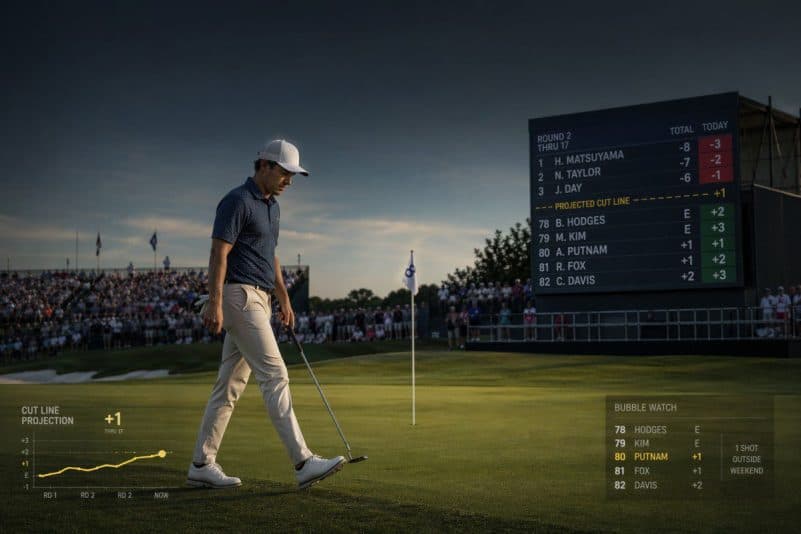
Friday on the PGA Tour is never quiet. The cut line turns one ordinary scoreboard into a season-changing pressure test.
The PGA Tour is putting more pressure back into professional golf.
Beginning with its new competitive structure in 2028, regular-season PGA Tour Championship Series events will feature approximately 120 players and a 36-hole cut to the top 65 and ties.
That is a meaningful change after golf spent several years featuring small, no-cut Signature Events.
The Tour's reasoning is mostly about competition and entertainment, but there is a lesson here for amateur golfers too:
Every round becomes different when there is something to lose.
A golfer who needs to shoot 74 to make a club championship cut approaches the final six holes differently than someone playing a casual Saturday round. Suddenly, the unnecessary driver over the corner, tucked pin over a bunker and four-foot comeback putt carry consequences.
That pressure exposes weaknesses that a normal practice session often does not.
It also exposes decision-making.
Under pressure, good players do not necessarily become more aggressive. They become better at understanding which risks are worth taking. A player standing on the 16th tee one shot inside the cut may be better served pulling a reliable club from the golf bag and finding the fairway rather than trying to hit the perfect driver.
Amateurs can recreate a smaller version of that pressure during practice.
Instead of hitting balls until the golf bag is empty, create a goal or drill that matters and try to complete it. Play nine holes trying to shoot a specific score. Give yourself one ball around the practice green and require five successful up-and-downs before leaving. Play a putting game where missing the final putt sends the score back to zero.
You can even create your own cut line.
Play 18 holes and set a target before the round. If your goal is 79, treat every shot as though 79 determines whether you advance to the weekend. Keep the ball in play, recognize when bogey is acceptable and pay attention to how your routine changes when you know every stroke counts.
The purpose is not punishment.
It is learning how your swing, decisions and emotions respond when the next shot matters.
Professional golfers are obviously playing for considerably more than a weekend Nassau, but the principle is the same.
Golf improves when good shots are rewarded and mistakes have consequences.
The PGA Tour is bringing that pressure back to more tournaments.
Amateurs should consider putting a little more of it into practice. It will make you a better player when the score actually matters.