
Should You Replace Your 3-Wood With a Mini Driver
By: Patrick Stephenson
The 3-wood has traditionally occupied one of the safest positions in the golf bag.
Driver goes the farthest. The 3-wood gives the player a shorter, more controllable option from the tee while remaining usable from the fairway.
Mini drivers are beginning to challenge that arrangement.
What started as a relatively specialized golf club has developed into a legitimate equipment category. TaylorMade, Callaway, Titleist, Cobra and PXG have all entered the market, while professional golfers have increasingly experimented with replacing traditional fairway woods with larger, lower-lofted heads designed primarily for the tee.
For some golfers, that makes perfect sense.
For others, removing the 3-wood would create a significant hole in the golf bag.
The decision should depend less on how fashionable mini drivers have become and more on what you actually ask your 3-wood to do.
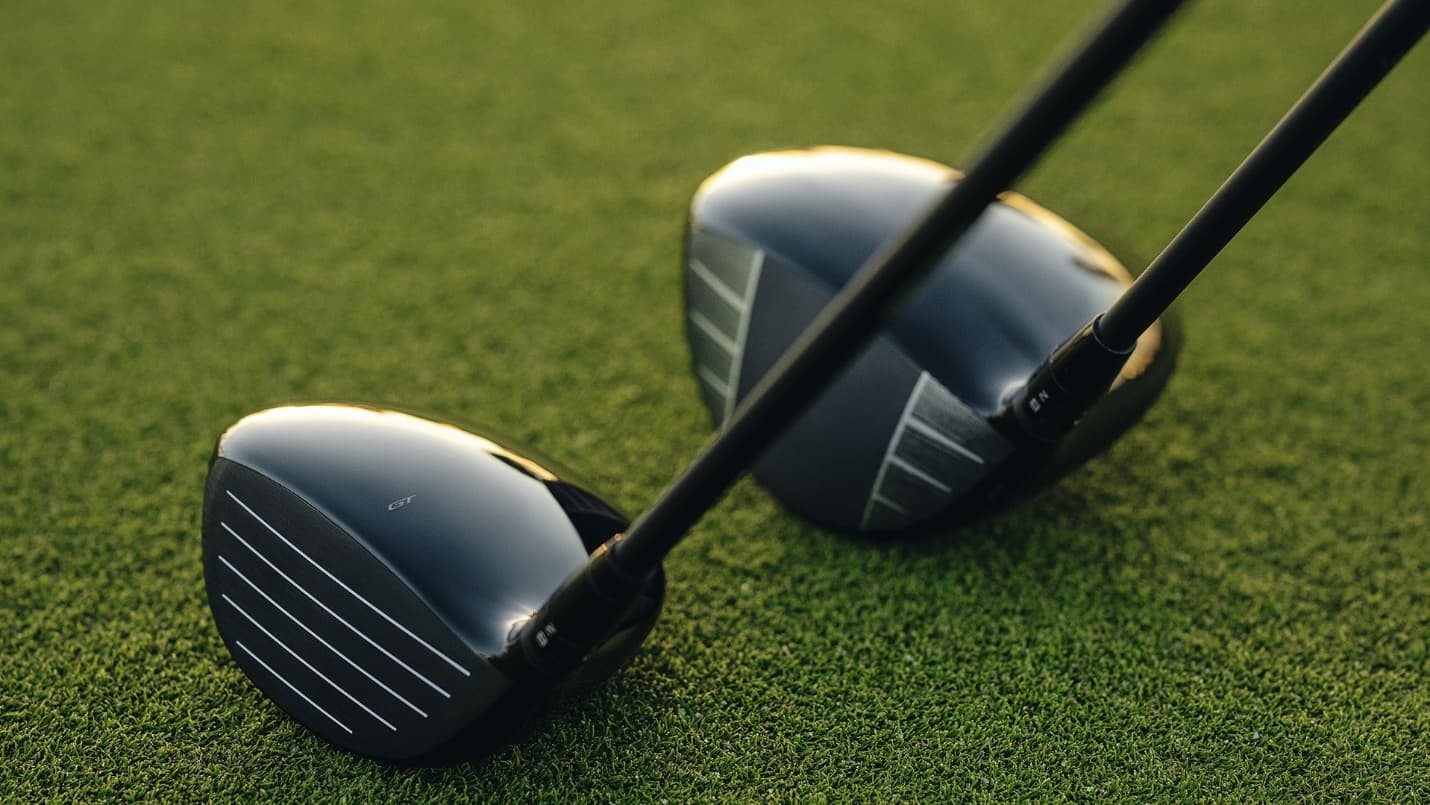
A modern mini driver generally sits somewhere between a traditional driver and 3-wood. It has more loft and a shorter shaft than a full-size driver, but a larger head and stronger loft than a traditional fairway wood.
Callaway's 2026 Quantum Mini Driver, for example, uses a 340cc head and is available in 11.5- and 13.5-degree lofts. A traditional 3-wood is often around 15 degrees with a head roughly half that size.
That extra volume creates more stability and forgiveness when hitting from a tee.
The shorter shaft also makes the mini driver easier to control than a full-length driver for many golfers.
When the Mini Driver Makes Sense
The strongest argument for replacing a 3-wood with a mini driver is surprisingly simple. Many golfers barely hit their 3-wood from the fairway.
Think about your last five rounds. How many times did you actually attempt a 3-wood from the turf For some players, the answer may be once or twice.
Now consider how often you reached for it from the tee because the hole was narrow, driver brought trouble into play or you simply wanted to put the ball in the fairway.
If most of your 3-wood shots already come from a tee, a mini driver deserves serious consideration.
Tommy Fleetwood provides an extreme professional example. He has said he has not carried a traditional 3-wood in several years, instead using a mini driver that travels roughly 20 yards shorter than his regular driver.
That gives him two distinct tee-shot options. The driver produces maximum distance. The mini driver gives him another ball flight and another distance without sacrificing as much yardage and forgivness as a 3-wood.
That same concept can work for amateurs. Imagine a player who carries his driver 260 yards and his 3-wood 225. Replacing the 3-wood with a properly fitted mini driver that carries somewhere around 240 to 245 could create a much more useful tee-shot gap.
On a 380-yard par 4 with trouble beginning at 270, the golfer no longer has to choose between challenging the trouble with driver or leaving himself 155 yards after hitting 3-wood.
The mini driver can occupy the middle.
There is another player who may benefit even more: someone who simply does not trust his driver.
Mini drivers usually have shorter shafts, more loft and smaller overall profiles than modern 460cc drivers. Those characteristics can make the club easier to control while still producing significantly more speed than a fairway wood.
It should not automatically replace a poorly fitted driver, but it can provide a dependable second option.
For the golfer who hits driver 14 times per round whether the hole requires it or not, carrying another legitimate tee club can also improve course management.
Sometimes the smartest equipment change is adding a club that makes the conservative decision easier to execute.
What You Give Up by Removing the 3-Wood
The argument changes the moment the ball is sitting on the ground.
A traditional 3-wood is specifically shaped to be hit from the turf. The head is shallower, there is more loft and the club's sole is designed to move through a fairway lie.
A mini driver can be hit off the deck. That does not mean most amateurs should expect it to perform like a 3-wood.
The larger and deeper head makes center contact more demanding from a tight lie. Lower loft can make launching the ball difficult, particularly for players without enough speed.
A scratch golfer might find a 13.5-degree mini driver surprisingly playable from the fairway.
A 15-handicapper who already struggles to launch a 3-wood may find the mini driver almost useless without a tee.
That creates the most important question when building the top end of your golf bag:
Do you actually need a club that can attack a par 5 from 220 to 240 yards? If the answer is yes, removing the 3-wood becomes harder to justify.
If the answer is no, the tradeoff becomes much easier.
Many golfers carry a 3-wood because golf bags have traditionally contained 3-woods, not because the club regularly produces a useful shot. Some would score better replacing it with a mini driver and allowing a 5-wood or 7-wood to become their longest fairway club.
That setup can create clearer jobs.
Driver: maximum distance.
Mini driver: controlled distance from the tee.
5-wood: longest reliable club from the turf.
The important word is reliable.
Golfers sometimes build their golf bags around the best shot they can hit instead of the shot they normally hit.
Yes, you may be capable of hitting a 3-wood 235 yards from a perfect lie.
If you actually produce that shot twice out of 10 attempts, it should not dictate your entire club setup.
Likewise, buying a mini driver because Tour players use one accomplishes nothing if it simply gives you a second club you cannot keep on the golf course.
This is where a fitting becomes valuable. Do not simply compare total distance.
Hit driver, mini driver and 3-wood from the tee and measure carry distance, ball speed and dispersion. Then hit the mini driver and 3-wood from the turf.
The right club should produce a useful distance gap while performing the shots you actually face during a round. For some golfers, the answer will still be a traditional 3-wood.
For others, the mini driver may expose that the 3-wood has occupied valuable space in the golf bag without serving a meaningful purpose.
There is also no rule requiring the decision to be permanent.
Competitive golfers regularly change their 14-club setup according to the course.
A tight golf course with several positional tee shots may favor the mini driver. A longer course containing reachable par 5s may make the 3-wood more valuable.
Most recreational golfers will prefer a permanent setup, but the principle remains useful: clubs should earn their positions in the bag.
The mini driver is not better than a 3-wood. It is better at a particular job.
If your 3-wood's primary job is hitting tee shots, the mini driver may now perform that job better. It offers more face area, more forgiveness and potentially more distance while retaining considerably more control than a full-size driver.
If your 3-wood regularly gets used from fairways, however, replacing it creates a compromise that may not be worth making.
Before changing your golf bag, track how you actually use the club for five rounds.
If almost every 3-wood shot begins with a tee underneath the ball, the answer may already be obvious.
Your 3-wood is acting like a mini driver.
You might as well test the club that was designed to be one.