
Experimental and Entertainment Golf
By: Patrick Stephenson
A new way to play golf.
For generations, golf was sold in essentially one format: arrive at a golf course, play 18 holes and spend several hours doing it.
That is no longer the only version of the game.
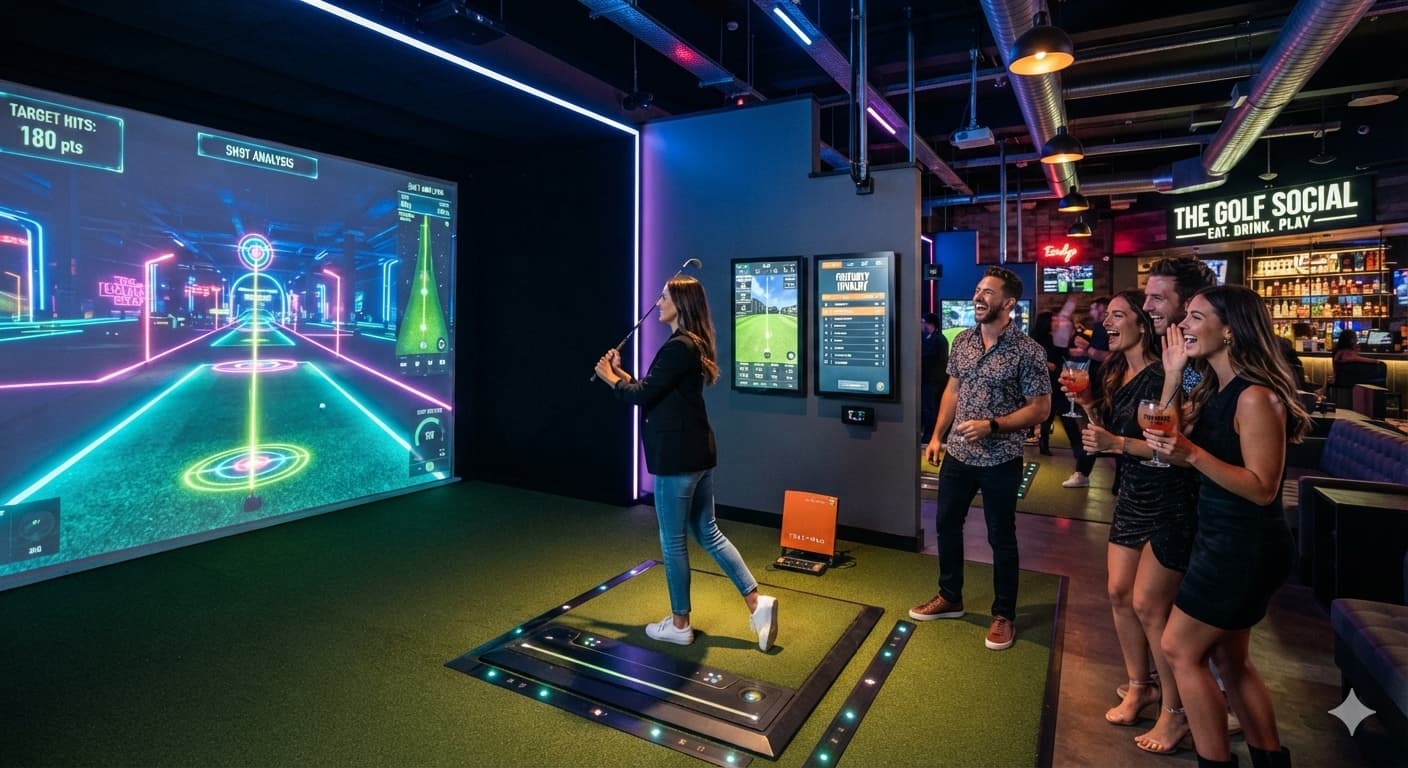
Simulator facilities, Topgolf-style entertainment venues, short courses and technology-driven competitions are creating new ways for people to experience golf without replacing the traditional game.
The numbers suggest golfers are embracing the change.
Approximately 38 million Americans participated in some form of off-course golf in 2025, including driving ranges, simulators and entertainment venues. Another 19 million participated exclusively away from a traditional course.
Professional golf is experimenting as well.
TGL combines simulator shots with a physical short-game area in an arena environment. Players compete in teams, wear microphones and complete matches in approximately two hours rather than spending an entire afternoon on a golf course.
The concept is continuing to expand. TGL will add a seventh men's team for 2027, while WTGL will bring a similar format to LPGA players.
These versions of golf are unlikely to replace the traditional 18-hole round.
They do not need to.
Their greatest value may be introducing golf to people who otherwise would never play.
A beginner can visit an entertainment venue without understanding golf etiquette. Friends can play simulator golf at night or during winter. Families can enjoy a short course without committing five hours to an 18-hole round.
Golf's future may therefore be less about deciding what counts as "real golf."
The sport is becoming a collection of experiences built around the same basic activity: hitting a golf ball and trying to get better at it.
For a game that spent years worrying about participation, giving people more ways to play may be one of the simplest growth strategies available.